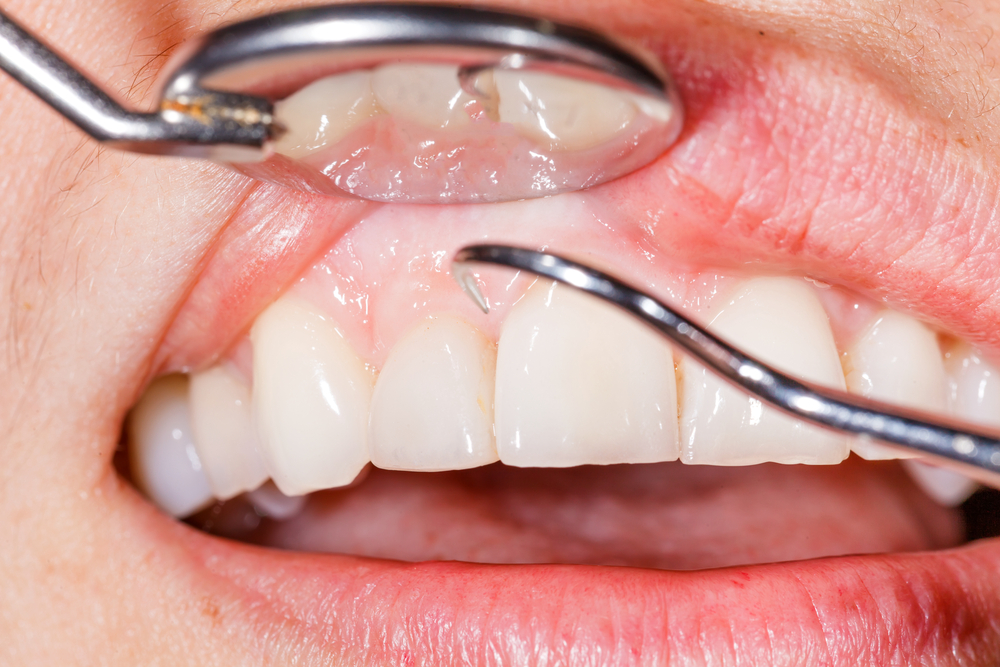
Receding gums happen when the gum tissue around a tooth pulls back and exposes more of the tooth or its root. It usually happens slowly, so many people don’t notice until a tooth looks longer or starts to feel sensitive. Gum recession is often a sign of periodontal disease, but infection isn’t the only cause. Brushing too hard, tobacco, and grinding your teeth can play a part, too. The sooner the cause is found, the easier it is to stop recession from getting worse.
Signs Your Gums Are Receding
- teeth that look longer than they used to
- sensitivity to cold, hot, or sweet foods, often the first thing people notice
- a notch you can feel with your fingernail near the gumline
- new gaps or dark triangles between your teeth
- red, swollen, or bleeding gums
- a bad taste or bad breath that doesn’t go away, which can point to gum disease
- teeth that feel loose or have shifted
What Causes Receding Gums?
- Gum disease. A bacterial infection slowly destroys the gum tissue and bone that hold your teeth in place. It is the main cause of gum recession. It starts as gingivitis, with red gums that bleed when you brush, so it pays to know how to prevent gum disease.
- Brushing too hard. A hard-bristled brush or scrubbing back and forth can wear the gums away over time.
- Tartar buildup. Plaque that isn’t removed hardens into tartar, which only a professional cleaning can remove.
- Tobacco. Smoking and chewing tobacco make gum disease more likely and slow healing.
- Grinding and clenching. Extra force on the teeth can contribute to recession. Read about teeth grinding and mouth guards.
- Crooked teeth or an uneven bite. Uneven forces and hard-to-clean spots can put some teeth at higher risk.
- Genetics. Some people have thinner gum tissue or are more prone to gum disease, even with good home care.
- Hormonal changes. Puberty, pregnancy, and menopause can make gums more sensitive.
- Lip or tongue piercings. Jewellery can rub against the gums and wear them down.
Can Receding Gums Grow Back?
Gum tissue that has receded does not grow back on its own. The good news is that treatment can stop recession from getting worse and, in some cases, gum surgery can cover exposed roots again. That is why it is worth having receding gums checked early, before more tissue and bone are lost.
How Dentists Treat Receding Gums
Treatment depends on what is causing the recession and how far it has gone.
- Deep cleaning (scaling and root planing). When gum disease is the cause, plaque and tartar are removed from below the gumline, and the root surfaces are smoothed so bacteria have a harder time reattaching. It is done with local anaesthetic, so most people feel very little.
- Fixing what causes it. If brushing too hard is the cause, a softer brush and a gentler technique help. If you grind your teeth, a custom night guard takes the force off your teeth while you sleep.
- Treating sensitivity. A desensitizing toothpaste or an in-office treatment can ease sensitivity on exposed roots, and dental bonding can cover a worn notch at the gumline.
- Gum surgery. When recession is advanced, a periodontist (gum specialist) may recommend a gum graft, which uses tissue, often from the roof of the mouth, to cover the exposed root, or a procedure that helps regenerate lost bone and tissue. If you need a specialist, we will arrange the referral.
You can read more about gum recession treatments, including the different types of gum grafts, on WebMD.
How to Stop Receding Gums From Getting Worse
- Use a soft-bristled toothbrush and gentle, circular strokes at the gumline. If you tend to press hard, an electric toothbrush with a pressure sensor can help. Our guide to choosing the right toothbrush explains what to look for.
- Clean between your teeth every day with floss or interdental brushes.
- Book a checkup and cleaning, usually every six months, or more often if your hygienist recommends it.
- Quit smoking or chewing tobacco.
- Wear a night guard if you grind or clench your teeth.
- Don’t ignore bleeding gums. They are an early sign of gum disease, which is easier to treat in its early stages.
Frequently Asked Questions
Are receding gums just a normal part of ageing?
Gum recession is more common as we get older, but age alone isn’t the cause. Gum disease, brushing habits, and grinding add up over the years. Recession at any age is worth having checked.
Is gum recession serious?
It can be. Exposed roots are more sensitive and more prone to decay, and recession caused by gum disease can lead to bone loss and loose teeth if it isn’t treated.
Can I fix receding gums at home?
Good home care can help stop recession from getting worse, but it can’t regrow gum tissue or remove tartar below the gumline. A dentist needs to find the cause and treat any gum disease.
Worried About Receding Gums?
If you have noticed your gums pulling back, book a checkup at our Fleetwood or Newton clinic in Surrey, or book online. We will find what is causing it and explain your options.