Now welcoming new patients
CDCP provider
★★★★★ 4.9 (1,100+ Google reviews)
In pain? Emergency care, often same-day ·In pain? Emergency care, often same-day · Call now
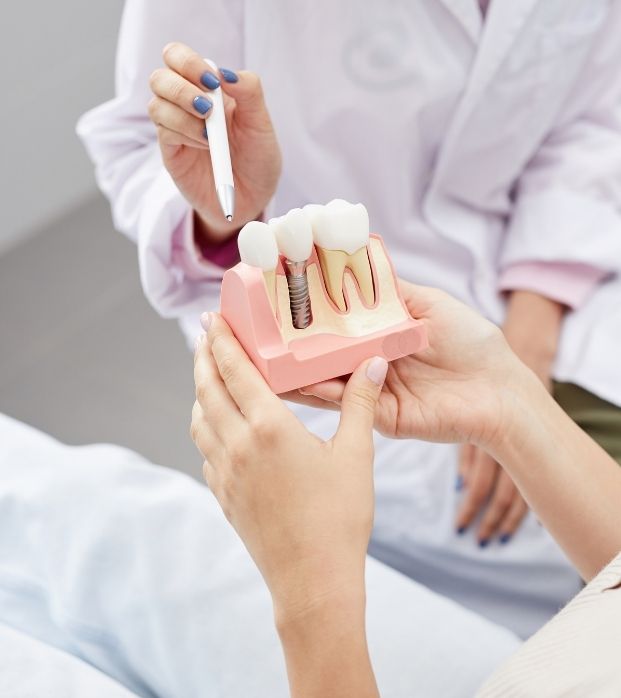
Short answer: Full-arch dental implants replace every tooth in your upper or lower jaw with one set of teeth, fixed or snap-on, held by four to six implants. Treatment usually takes several months while the bone bonds with the implants. Good candidates have healthy gums and enough jawbone, or bone that can be rebuilt.
If you’re missing most of your teeth, or living with a denture that slips, clicks, and rubs, you’ve probably heard about full-arch dental implants. This guide explains how they work, how the well-known All-on-4 approach fits in, what healing really looks like, and who tends to be a good fit. At Green Apple Dental, every implant is planned on a 3D scan first, so you know what to expect before anything begins.
Full-arch dental implants are a way to replace all of the teeth in your upper or lower jaw using a small number of implants, instead of one implant for every missing tooth. A “full arch” simply means the whole row of teeth in one jaw.
Implants are small titanium posts placed in the jawbone. Once they bond with the bone, they act like strong roots, and a full set of replacement teeth is attached to them. Cleveland Clinic describes full-arch implants as “usually four to six” implants supporting a full arch of teeth, either fixed or snap-on (Cleveland Clinic: dental implants).
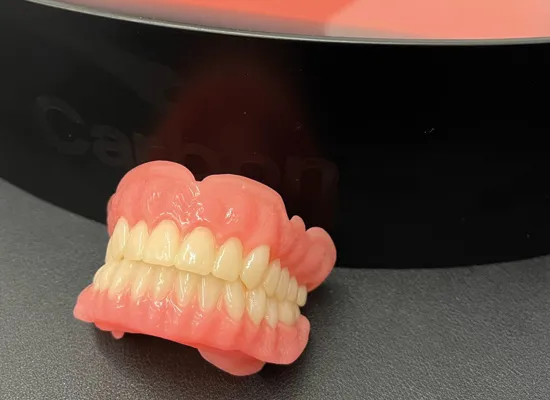
There are two main types of full-arch restoration:
Here is how the two options compare:
| Fixed full-arch teeth | Implant-supported denture | |
|---|---|---|
| How it stays in | Fixed to the implants | Clips or snaps onto the implants |
| Who takes it out | Only your dental team, for cleaning and check-ups | You, every night, to clean it |
| Daily cleaning | Brush, then clean under it with a water flosser or small brushes | Clean the denture, and brush around the implants |
| How it feels | Closest to natural teeth | Very stable, but still removable |
| Often suits | People who want teeth that never come out | People who want a removable option, or whose bone or budget favours it |
All-on-4 is a well-known approach to fixed full-arch teeth that uses four implants per jaw. The All-on-4® treatment concept comes from the implant maker Nobel Biocare, which describes it as two straight implants at the front and two back implants tilted up to 45 degrees (Nobel Biocare: All-on-4 treatment concept).
All-on-4 isn’t right for everyone. Depending on your bone and your bite, some people do better with five or six implants, and others prefer a removable implant-supported denture. The right number of implants is the one that fits your jaw, not a number picked in advance.
Full-arch treatment follows six main steps over several months, with quiet healing time in between. Here is what each step involves.
Everything starts with a careful exam and a low-dose 3D CT scan. The scan shows your bone and nerves in detail, so your dentist can see where implants can safely go.
At Green Apple Dental, our connected scanners line up your scans into one 3D plan that we review with you on a large screen. Your consultation includes the scan, your plan shown on screen, and a written estimate. Learn more about our 3D imaging.
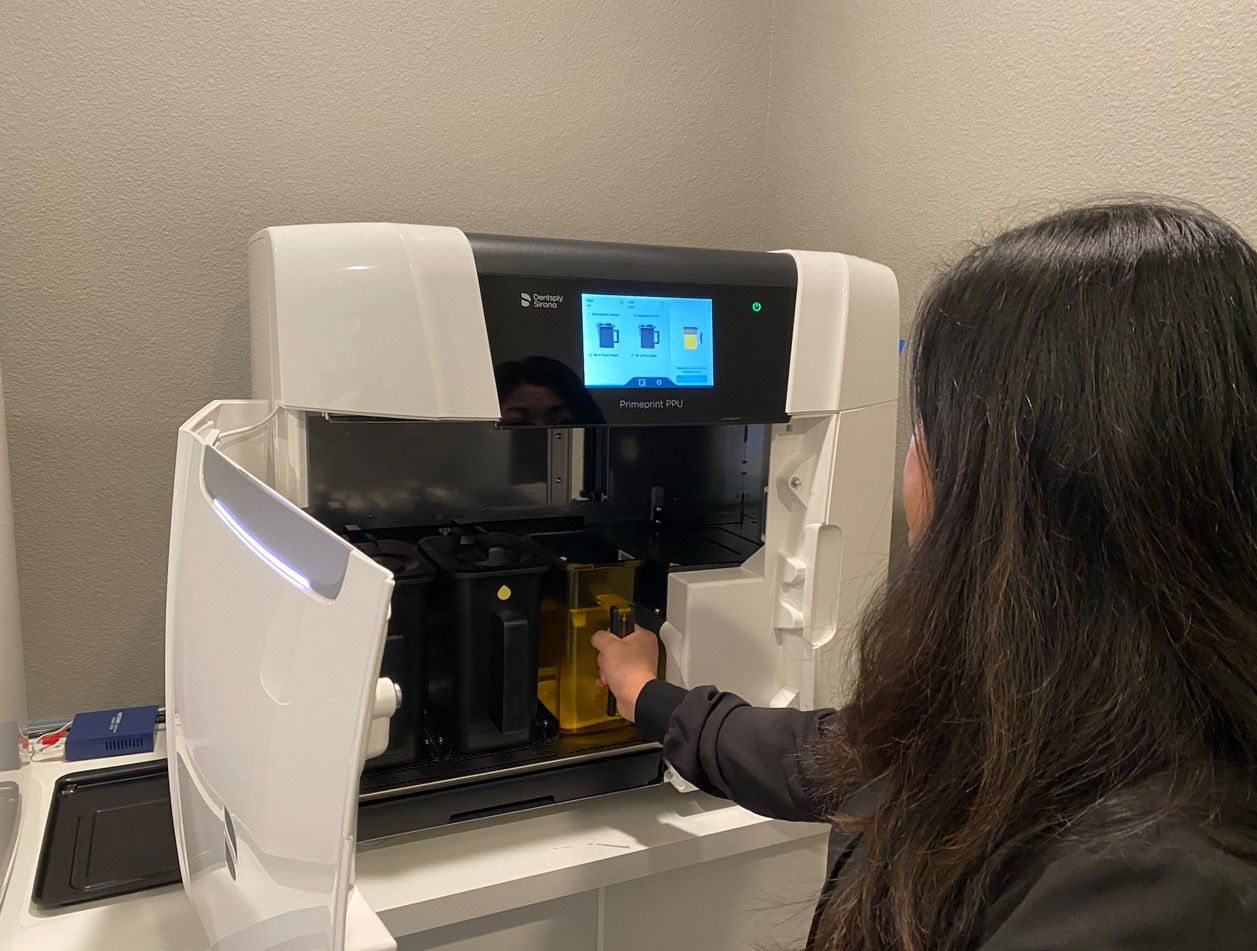
Using your 3D plan, a surgical guide is designed to set the planned position, angle, and depth of each implant. At Green Apple Dental, these guides are 3D-printed in our own clinic.
If you still have teeth that can’t be saved, they’re removed. If your jawbone needs more support, a bone graft may be part of your plan, and we can rebuild bone in our own clinic.
Grafting adds a few months of healing, so your dentist will explain how it affects your timeline. Our article on bone grafts explains the procedure.
The implants are placed with the area fully frozen. If you feel anxious, oral sedation is available to help you relax, and our page on sedation for nervous patients explains how it works. We call you the day after your placement visit to check how you are feeling.
In many fixed full-arch cases, a temporary set of teeth can be attached soon after the implants are placed, so you’re not left without teeth while you heal. Whether this is possible depends on how firmly the implants are anchored in your bone. Your dentist will tell you what to expect for your case.
Once the implants have bonded with the bone, your final teeth are made and fitted. They are designed to match your bite and suit your face, with a shape and shade chosen with you.
Most of the soreness settles within the first few days, but the bone needs about three to nine months to fuse with the implants, according to Cleveland Clinic. Your final teeth are fitted after that. Every case is different, but here’s a general picture:
If you need extractions or bone grafting first, your overall timeline will be longer. You get a written care card, an after-hours number our team answers, and a timeline in your written plan that shows each stage before treatment begins.
Good candidates are adults who are missing most of their teeth in a jaw, or whose remaining teeth are failing, and who have healthy gums and enough jawbone, or bone that can be rebuilt. You may be a good candidate if you:

Things that may need extra planning: Cleveland Clinic lists smoking or vaping, unmanaged diabetes, severe jawbone loss, and untreated gum disease among the concerns that can affect implant healing. Teeth grinding can also put extra stress on implants. None of these automatically rules you out, but they’re important to discuss at your consultation.
For many people, the biggest changes are in eating, speaking, and comfort:
Results vary from person to person, so ask to see before-and-after photos of cases similar to yours.
The cost of full-arch dental implants depends on your own plan, so you get a written, itemized estimate after your 3D scan and before anything begins. The main factors are:
At Green Apple Dental, our fees follow the BC Dental Association’s fee guide for general dentists. We bill insurance directly, costs can follow the stages of your treatment, and monthly payment plans and third-party financing are available for larger treatments like implants. See our dental implant cost page for what an estimate includes.
The Canadian Dental Care Plan (CDCP) doesn’t currently cover implants. Implants are not on the federal government’s list of CDCP-covered services, which does include complete dentures. Our Canadian Dental Care Plan page explains how we help CDCP patients.
Implant teeth can’t get cavities, but the gums and bone around them still need daily care:
Read more about how long dental implants last with good care.
Start with an implant consultation at our Fleetwood or Newton clinic in Surrey. We’ll take your 3D scan, show you your plan on screen, explain your options in plain language, and give you a written estimate, with no obligation.
Plan your implant consultation
Prefer to call? Reach our Fleetwood clinic at 604-597-1311 or our Newton clinic at 604-503-1722.
Most cases take several months from placement to final teeth. The jawbone needs about three to nine months to bond with the implants, according to Cleveland Clinic. Extractions or bone grafting add time, and your written plan shows each stage.
The area is fully frozen, and oral sedation is available if you feel anxious, so most people feel pressure rather than pain. Swelling, soreness, and some bruising for a few days afterward are normal.
Not exactly. Full-arch implants is the general term for replacing a whole row of teeth on implants. All-on-4® is one named treatment concept from Nobel Biocare that uses four implants per jaw, and some people need five or six implants instead.
Neither is better for everyone. Fixed teeth feel closest to natural teeth, while an implant-supported denture is removable and can suit different budgets and bone levels. Your dentist will help you compare them on your own 3D scan.
Often, yes. Bone can be rebuilt with grafting, which adds a few months of healing before the implants. Angled back implants can sometimes use the bone you already have.
Many private dental plans cover part of implant treatment as major care, but every plan is different. We bill directly and check your coverage for you. The Canadian Dental Care Plan doesn’t currently cover implants.
With good daily care and regular check-ups, implants can last many years. The teeth attached to them handle daily wear, so check-ups help catch small problems early.
Not always. At Green Apple Dental, implants are planned and placed in our own clinics by a team led by Dr. Pavandeep Kooner, and if a specialist is the better choice for your case, we’ll tell you honestly.